
When planning an extension to your home, the drawings you submit to your local authority (and later your builder) are more than artistic sketches, they are a legal, technical and communicative tool. Getting them wrong can delay approval, lead to rejections or cause costly mistakes on site.
In this article, we walk through what your extension planning drawings must include, with particular attention to single storey extensions, kitchen plans, and the constraints of permitted development in the UK. We also show how AA Drafting can guide you every step of the way.
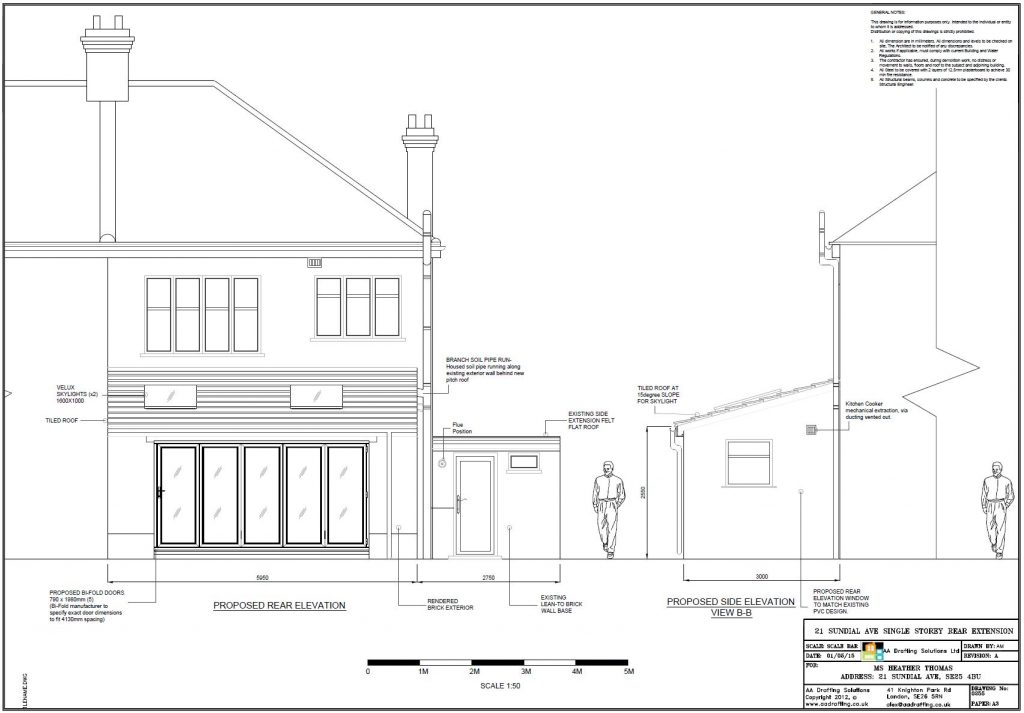
Drawing Types: What You Must Include
A comprehensive submission should include the following (or more, depending on site complexity):
Drawing Type | Purpose / What It Shows | Key Requirements / Notes |
Location Plan & Site Plan (or Block Plan) | Show the property in context — neighbouring buildings, roads, plot boundaries | Use a standard scale (e.g. 1:1250 for location, 1:500 or 1:200 for site). Include north arrow, scale bar, road names, property outline. |
Existing Floor Plans | Current layout prior to extension work | Clearly annotated, dimensioned, and labelled (rooms, walls, doors, windows). |
Proposed Floor Plans | How the extension will change the layout | Shows new walls, openings, circulation, doors, furniture layout (especially for kitchen). |
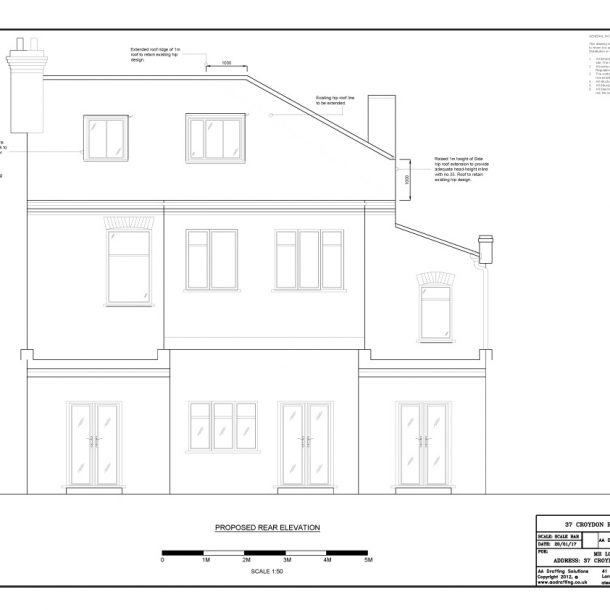
Elevations | Views of all external faces (front, rear, sides) | Show existing vs proposed materials, window/door styles, heights. |
Roof Plan | Outline of roof footprint, slopes, ridges, drainage | Include rooflights, chimneys, drainage fall. |
Sections & Cross‑sections | Vertical cuts through the building | Show floor-to-ceiling heights, ground levels, structural elements (e.g. beams, joists, foundations). |
Detail Drawings | Junctions (wall/roof, wall/floor, parapets etc.) | Clarify insulation layers, damp proofing, flashing, waterproofing. |
Structural Layouts | Beams, lintels, columns, foundation plan | Often prepared in collaboration with a structural engineer. |
Services Layouts | Plumbing, drainage, electrical, ventilation | Especially critical in kitchen extension drawings to show run of pipes and connections. |
Thermal / Insulation / Compliance Diagrams | To demonstrate how the property extension meets energy / building regulation standards | U‑values, ventilation strategy, thermal bridging mitigation. |
Fire Safety & Escape / Openings Near Boundaries | Show escape routes, window sizes / positioning, fire resistance where required | Especially important when windows are near boundaries. |
Many planning authorities have drawing standards you should adhere to. For example, Oxford City Council sets clear guidelines on scales and presentation.
Also note: even if your extension is considered permitted development, you still need building regulation drawings.
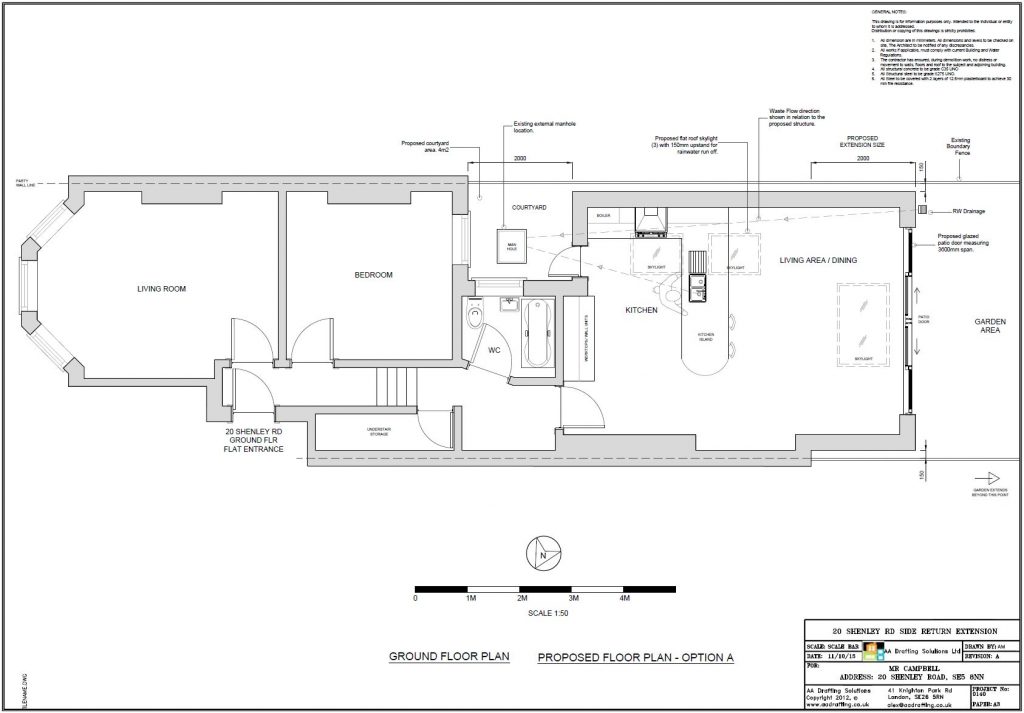
Special Considerations for a Single Storey Extension
Single storey extensions are one of the most common types of residential works. But they come with rules and nuances:
Permitted Development thresholds:
For a detached house, a rear extension can extend up to 4m under permitted development; for terraced or semi‑detached houses, the limit is 3m. If you require more length (e.g. 6m or 8m), you may apply under prior approval under the House Extension Scheme.
Height restrictions:
Single storey rear extensions must generally not exceed 4m in height. If the extension is within 2m of a boundary, the eaves height must be no more than 3m.
Roof types:
Options include flat roofs, mono-pitched, pitched with matching pitch, or rooflights / lanterns. The roof pitch should match or complement the existing house whenever possible under permitted development rules.
Integration with kitchens / open plan layouts:
Many single storey extensions are used to expand or reconfigure kitchen/diner spaces. Your drawings must coordinate plumbing, drainage and appliance layout. Also, consider structural consequences of large openings between old and new spaces.
Daylight & overshadowing:
Ensure windows are sensibly placed, acknowledge neighbour rights and minimise overshadowing of neighbouring properties.
When Permitted Development Applies (and When It Doesn’t)
What Is Permitted Development
Permitted development (PD) refers to certain works that a homeowner can carry out without needing full planning permission, subject to conditions.
However, even under PD, you’ll often need to submit scaled drawings (existing & proposed, site plan) and potentially a Lawful Development Certificate (LDC) or prior approval in some cases.
Differences in Drawings under PD vs Full Planning
- Under PD, documents are typically more constrained; you must show your extension abides by the PD limits (size, height, materials)
- For full planning, you may need more context: impact analysis (neighbour amenity, visual impact), design statements, heritage or conservation assessments
- If your project exceeds PD limits, you’ll need a full planning application — your drawings must then be more robust and anticipate planning scrutiny
Common Challenges & Rejections
- Failing to adhere strictly to PD limits (depth, height, distance from boundaries)
- Using materials that do not match or complement existing property
- Poor drawings that lack clarity on dimensions or context
- Drawing errors or missing structural or drainage details
Why Detail Matters: Common Pitfalls & Rejections
Even a seemingly small omission or ambiguity can jeopardise your planning or building control approval. Common pitfalls include:
- Missing or incorrect site boundary, neighbouring building outlines or context
- No structural input (beams, lintels, foundations) or missing engineer’s details
- Inaccurate levels, heights or ground contours
- Poor annotation, missing dimension labels or unclear notes
- Not addressing drainage or connection to existing plumbing/sewer
- Overlooking insulation, ventilation or fire safety compliance
- Lack of clarity on materials, finishes and external appearance
By contrast, well-drafted drawings minimise ambiguity, help the planners and building control teams understand your proposals faster, and reduce the need for revisions.
How Kitchen Layouts & Interior Flow Influence Your Drawings
The kitchen is often the heart of a home, and when your extension involves a kitchen upgrade, your drawings need to speak both technically and functionally.
Plumbing and drainage: Show the location of sinks, appliances, waste pipes and drainage runs tying into existing mains.
Ventilation / extractors: Indicate extractor fans, duct runs, air inlets, etc.
Large structural openings: If you want a wide opening to integrate old and new space (e.g. removing walls or adding large glazed doors), coordinate with structural drawings.
Flow & circulation: Show layouts of worktops, movement paths, furniture and links to adjoining rooms.
Lighting & natural light: Indicate window sizes, rooflights or glazing arrangements to ensure a bright, workable space.
Including a “furniture layout / kitchen plan overlay” on your proposed plan can give planners and building control a clearer sense of how the space will function.
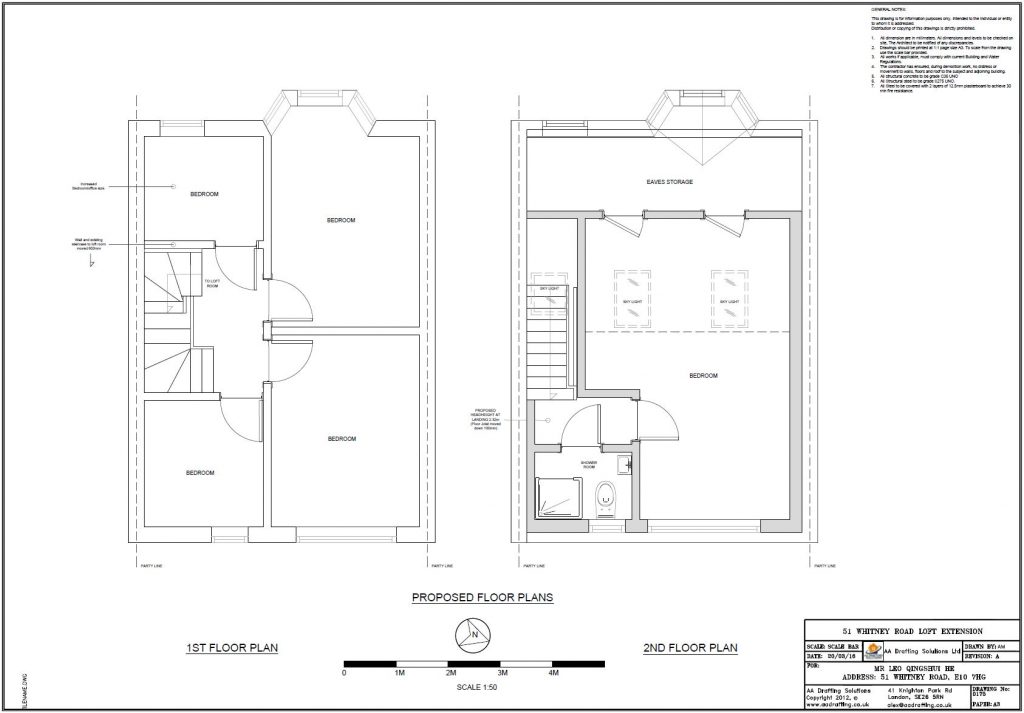
Workflow: From Survey to Submission
Here’s a typical project workflow and how your drawing package evolves:
- Site Survey & Measured Survey
– Document existing walls, openings, levels, utilities
– Record site boundaries, neighbour context - Concept / Schematic Drawings
– Rough layout options and massing
– Client feedback and iterations - Refined Design & Coordination
– Structural engineer integration
– Services (plumbing, drainage, ventilation)
– Material / fenestration decisions - Preparation of Full Drawing Package
– All plan, elevation, section, detail drawings
– Compliance diagrams (thermal, insulation, fire)
– Supporting documents (design & access statement, specification notes) - Submission to Local Authority / Building Control
– Planning application (or PD / prior‑approval)
– Building regulation application (often separately) - Liaison & Revisions (if needed)
– Respond to comments from planners or building control
– Revise drawings and resubmit - Approval & Construction Handover
– Approved drawings used on site
– Contractor execution, inspections, sign‑off
Your drawing package isn’t static — it evolves through feedback and review until final approval.
Why Use Experts Like AA Drafting
When you choose AA Drafting for your extension project, you benefit from:
- Local London & Greater M25 expertise — we know the boroughs, policies and typical planning responses. (see our Planning Permission page)
- Proven experience in preparing both planning and building regulation drawings.
- Handling of revisions, objections and liaison with local authority officers
- Comprehensive packages including structural coordination, specification and project support
- Free quote and consultation upfront
If you’d like to see more of our recent work, visit our Portfolio / Projects page.
Checklist: Your Extension Drawing Submission Must Include
Before submitting, ensure your package at least includes:
- Location plan / site plan with context
- Existing and proposed floor plans
- Elevations (all relevant sides)
- Roof plan
- Sections / cross-sections
- Structural layouts (beams, foundations, lintels)
- Detail drawings (junctions, flashing, insulation)
- Services layouts (plumbing, drainage, ventilation, electrics)
- Compliance diagrams (thermal, fire, insulation)
- North arrow, scale bars, annotations, dimensions
- Material / finish notes
- Supporting documents (design & access statement, specification)
- File formats and drawing presentation (PDF, DWG, proper formatting)
Make sure everything is clear, legible, and labelled well before submission — this helps avoid delays.
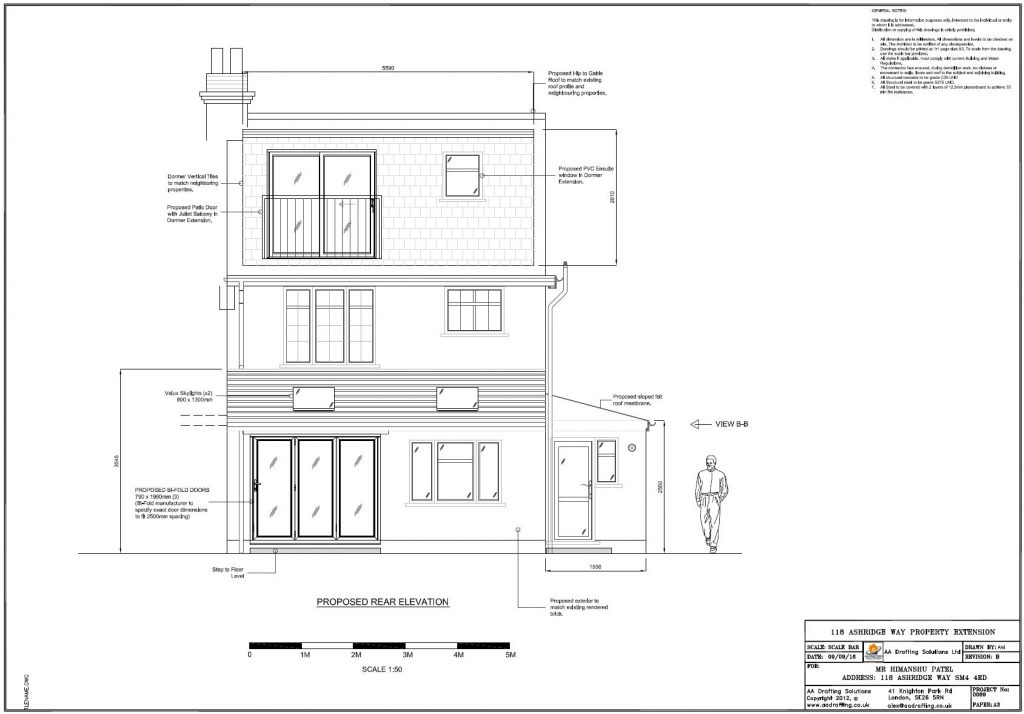
Next Steps
High-quality extension planning drawings are non-negotiable. They communicate your design, ensure legal compliance, assist your contractor and pave the way for smooth approvals. Whether you are building under permitted development or submitting a full planning application, the right drawing package can make all the difference.
If you’re ready to move forward or want a no-obligation consultation, contact AA Drafting today. Let us convert your ideas into technically robust, planning-approved drawings so your extension can get built efficiently and beautifully.

Contact
Office Address
3-7 Sunnyhill Rd
Streatham Wells
Lambeth
London SW16 2UG
Opening Hours
Mon — Thurs — 9am – 6pm
Fri — 9am – 5pm
Sat — 9am – 2pm
Sun — Closed
Fri — 9am – 5pm
Sat — 9am – 2pm
Sun — Closed



This website uses cookies to improve your experience. We'll assume you're ok with this, but you can opt-out if you wish. Cookie settingsACCEPT
Privacy & Cookies Policy
Privacy Overview
This website uses cookies to improve your experience while you navigate through the website. Out of these cookies, the cookies that are categorized as necessary are stored on your browser as they are essential for the working of basic functionalities of the website. We also use third-party cookies that help us analyze and understand how you use this website. These cookies will be stored in your browser only with your consent. You also have the option to opt-out of these cookies. But opting out of some of these cookies may have an effect on your browsing experience.
Necessary cookies are absolutely essential for the website to function properly. This category only includes cookies that ensures basic functionalities and security features of the website. These cookies do not store any personal information.
Any cookies that may not be particularly necessary for the website to function and is used specifically to collect user personal data via analytics, ads, other embedded contents are termed as non-necessary cookies. It is mandatory to procure user consent prior to running these cookies on your website.
Loading...
Loading...