

A Land Registry lease plan needs to identify the leased property clearly enough for the lease and, where required, a registration application. It should be accurate, legible and consistent with the property address, extent and rights described in the legal documents. This guide provides a practical compliance checklist for landlords, solicitors, developers, freeholders and leaseholders. If you first need the basics, read what a lease plan is.
Quick Answer
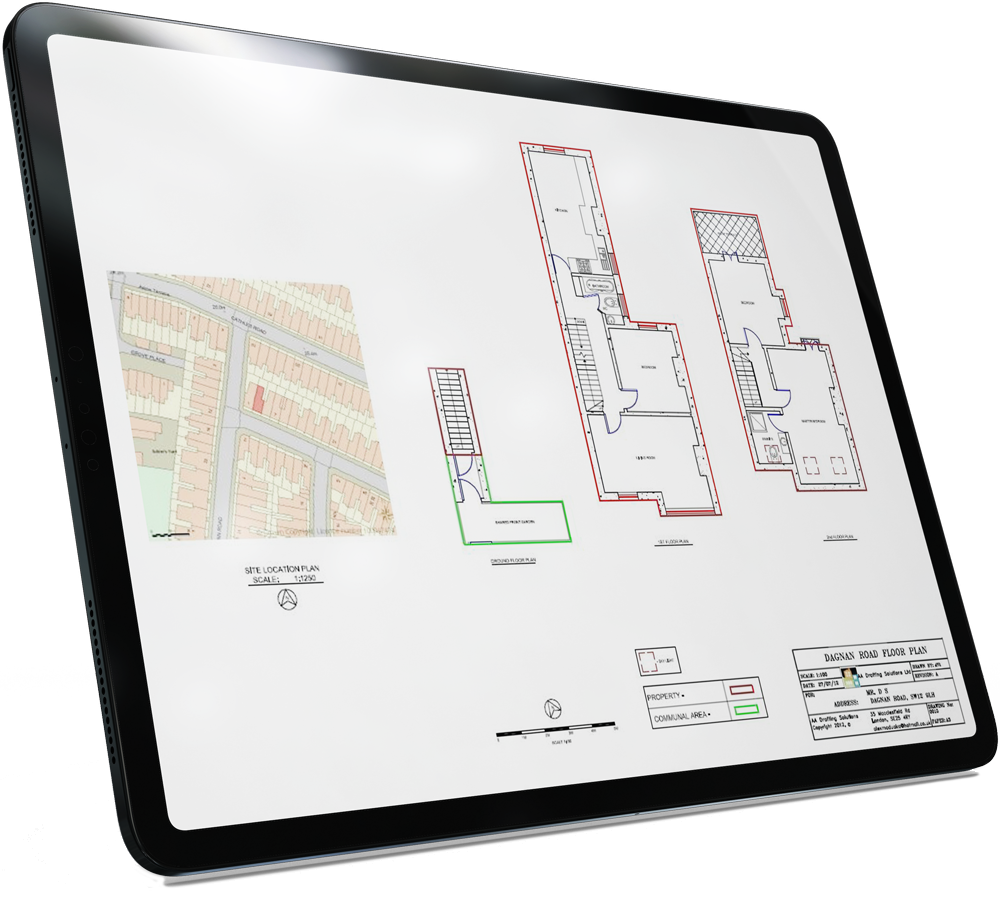
For a lease of part, a plan will normally need to show the property at a suitable scale with sufficient context, clear identification of the demised area, a north point where appropriate and any relevant shared areas or rights of way. The exact requirements depend on the application and the wording of the lease. Check the final requirements with the solicitor or conveyancer handling the transaction before the plan is prepared or submitted.
When Is a Land Registry Lease Plan Needed?
A plan may be needed where a lease is being registered and the property needs to be identified clearly. This is particularly common for a new long lease, a lease of part of a registered title, a flat or commercial unit within a larger building, or a variation that changes the property extent. A lease granted for more than seven years will normally require registration in England and Wales.
A separate plan is not automatically needed for every leasehold sale or document. The solicitor or conveyancer can confirm whether the existing lease and title information identify the property sufficiently for the intended transaction.

Land Registry Lease Plan Checklist
Use this checklist before sending a plan to the legal team or submitting a registration application:
Check | What to confirm |
Property identification | The full address, unit number, floor or block reference matches the lease and supporting documents. |
Scale and legibility | The plan is drawn at a suitable stated scale, remains clear when printed and is not distorted or pixelated. |
Extent of the lease | The property, land, parking, garden, store or other areas included in the lease are identified unambiguously. |
Context and orientation | The plan includes enough surrounding detail to locate the property. Include a north point where it is relevant to the plan. |
Shared areas and rights | Communal halls, accessways, parking, rights of way or areas excluded from the lease are distinguished clearly where relevant. |
Floor level | For a flat, office or other multi-storey property, the correct floor or level is identified. |
For current technical guidance, refer to HM Land Registry plans guidance and Practice Guide 40 guidance for preparing plans.
Common Reasons a Lease Plan May Need Revision
- The plan does not make the leased extent clear enough for the legal documentation.
- The address, unit reference or floor level differs from the lease or title information.
- Parking, gardens, stores, rights of way or shared access are missing or unclear.
- The plan is an estate-agent floor plan rather than a plan prepared for legal and registration use.
- The plan is difficult to read at the stated scale or does not provide enough location context.
How Planning Permission Relates to a Lease Plan
Planning permission and Land Registry requirements are separate processes. Planning permission deals with whether development or a change of use can proceed. A lease plan identifies the property and rights described in a lease. One does not replace the other.
The two sets of drawings should, however, be checked against each other where a project changes the property being leased. This may apply to a flat conversion, new build, extension or change of use. The lease plan should reflect the final legal extent, while planning drawings should reflect the development submitted to or approved by the local authority.
For projects that need council approval, AA Drafting can prepare planning permission drawings and coordinate the information needed for the wider project.

Multi Unit and Conversion Projects
Flat conversions, HMOs and mixed-use buildings often need particular care because the legal extent of each unit must be distinguishable from communal and retained areas. Check that the relevant units, entrances, stairs, gardens, bin stores, parking and access rights are consistently described across the drawings and legal documents.
Where a single dwelling is being divided into flats, see our flat conversion planning service for wider planning and drawing support.
How AA Drafting Can Help
AA Drafting prepares clear lease-plan drawings for residential and commercial properties across London. We can work from suitable existing plans or arrange a survey where the available information is insufficient. Before work begins, provide the property address, relevant plans and any requirements received from the solicitor or conveyancer.
Request professional lease plan support for a tailored quote and practical next steps.
FAQs
The plan needs to identify the leased extent and any relevant rights or shared areas clearly. The preferred method should be agreed with the solicitor or conveyancer and should match the legal documentation.
Usually not on its own. Marketing floor plans are intended to show layout and rooms, whereas a legal plan must identify the lease extent and provide the level of detail required for the transaction.
No. Planning approval and Land Registry requirements are different. The drawings should be consistent where the development changes the property extent, but the legal and registration checks remain separate.
You may need one where the variation changes the property extent or rights, such as adding roof space, a garden or parking. Ask the solicitor handling the variation to confirm the requirement.


Contact
Office Address
3-7 Sunnyhill Rd
Streatham Wells
Lambeth
London SW16 2UG
Opening Hours
Mon — Thurs — 9am – 6pm
Fri — 9am – 5pm
Sat — 9am – 2pm
Sun — Closed
Fri — 9am – 5pm
Sat — 9am – 2pm
Sun — Closed



This website uses cookies to improve your experience. We'll assume you're ok with this, but you can opt-out if you wish. Cookie settingsACCEPT
Privacy & Cookies Policy
Privacy Overview
This website uses cookies to improve your experience while you navigate through the website. Out of these cookies, the cookies that are categorized as necessary are stored on your browser as they are essential for the working of basic functionalities of the website. We also use third-party cookies that help us analyze and understand how you use this website. These cookies will be stored in your browser only with your consent. You also have the option to opt-out of these cookies. But opting out of some of these cookies may have an effect on your browsing experience.
Necessary cookies are absolutely essential for the website to function properly. This category only includes cookies that ensures basic functionalities and security features of the website. These cookies do not store any personal information.
Any cookies that may not be particularly necessary for the website to function and is used specifically to collect user personal data via analytics, ads, other embedded contents are termed as non-necessary cookies. It is mandatory to procure user consent prior to running these cookies on your website.
Loading...
Loading...